
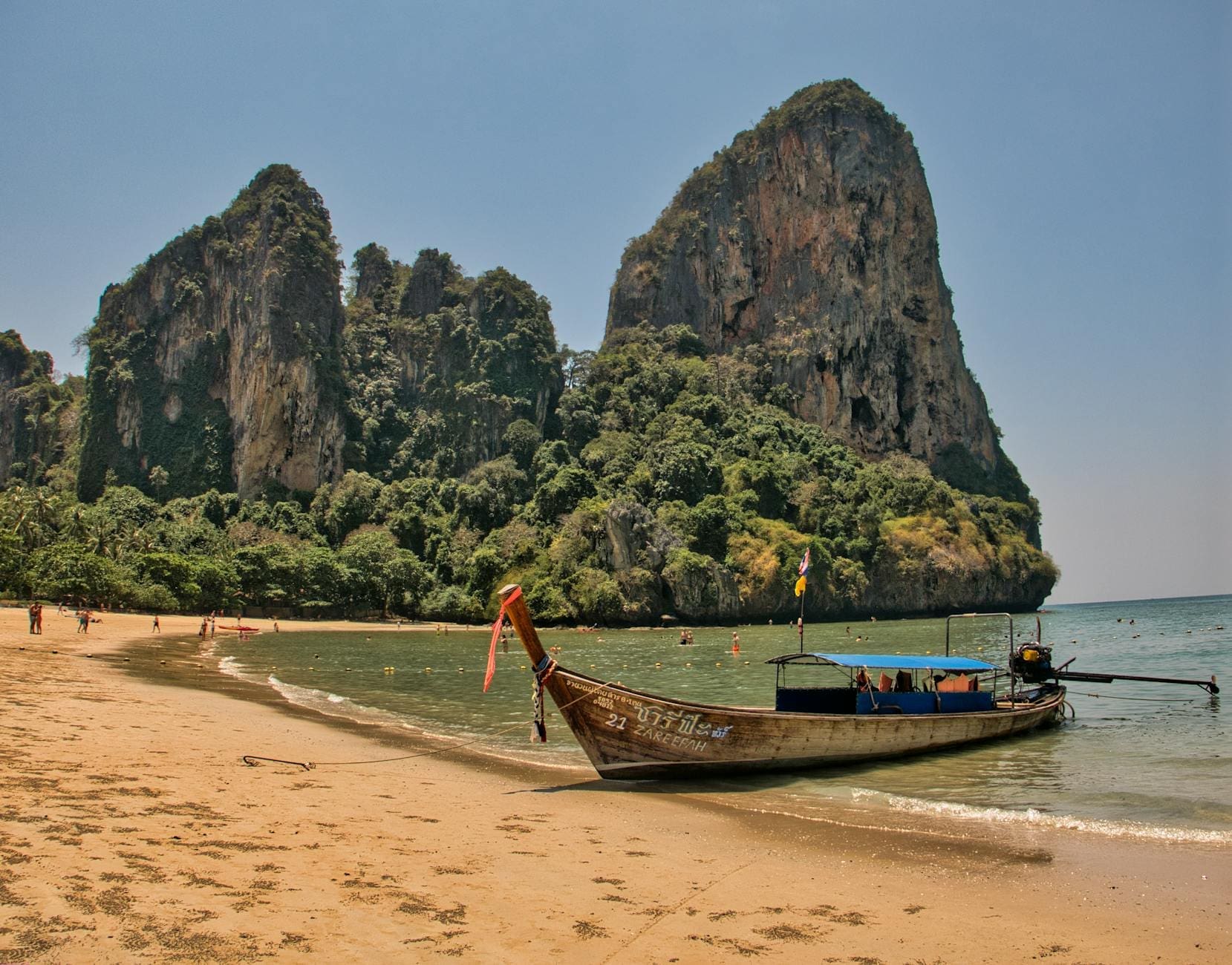

Dreaming of a Thailand trip that blends culture, nature and island time without rushing? This 2-week Thailand itinerary takes you from the misty mountains of Chiang Mai and Chiang Rai, through waterfalls and hill tribe country, down to the dramatic limestone cliffs of Krabi, the laid-back beaches of Koh Lanta, and the eclectic energy of Bangkok.
Designed for DIY travellers, this route focuses on realistic travel times, rest days, and unforgettable experiences – from temples and street food to island hopping and sunset beaches.

This post is part of my complete Thailand Travel Guide, where I share itineraries, budget tips and DIY planning advice for visiting Thailand.
Contents
- Introduction
- The Route at a Glance
- Northern Thailand
- Stop 1: Chiang Mai (5 nights)
- Things to Do in Chiang Mai
- How to Get from Chiang Mai to Chiang Rai
- Stop 2: Chiang Rai (2 nights)
- Things to Do in Chiang Rai
- How to Get from Chiang Rai to Krabi
- Southern Islands Hopping
- Stop 3: Krabi (3 nights)
- Things to Do in Krabi
- How to Get from Krabi to Koh Lanta
- Stop 4: Koh Lanta
- What to do on Koh Lanta
- How to Get from Koh Lanta to Bangkok
- Stop 5: Bangkok (2 nights)
- Things to Do in Bangkok
- Planning Your Thailand Itinerary
- Best Time of Year to Go
- How to Get Around Thailand
- Where to Book Accommodation
- Booking Tours & Activities
- Final Thoughts
Some of my content may contain affiliate links for companies I use and love and recommend to awesome readers like yourself. If you take action, (i.e. subscribe, make a purchase) after clicking one of these links, I’ll earn a small amount of pocket money (at no extra cost to you), so I can buy a coffee while creating more helpful content like this.
Introduction
This Thailand itinerary is inspired by real experiences in the north, combined with first-hand knowledge of Bangkok and a long-held dream of island hopping in southern Thailand.
Part of it is inspired by my daughter’s time in Northern Thailand, where she travelled with G Adventures from Bangkok to Chiang Mai on the overnight sleeper train – a brilliant way to see the country change slowly from city sprawl to mountains and jungle. She fell in love with the slower pace, mountain scenery, waterfalls and hill tribe culture in the north, and every story she told made me want to go even more.

The rest of this itinerary is rooted in our own experience of Bangkok – a heady mix of temples, roof-top bars and leafy parks combined with the chaos and energy of Khao San Road, markets and street food. And finally, my long-held dream of exploring Thailand’s southern islands by boat, between limestone cliffs, turquoise water and laid-back beach towns.
In this guide, I share a blend of real experience and future plans: what we know works well, what we’d do differently next time and how you can plan and follow the same route yourself.
Northern Thailand has a completely different landscape to the south, with misty mountain scenery, temples and waterfalls. After the slow, authentic pace of Northern Thailand, is the promise of turquoise water and limestone cliffs in the south. And lastly, the unforgettable energy of Bangkok. With this itinerary you have the foundations of an incredible trip.
I’ve designed the itinerary as a logical, realistic two-week route. It’s perfect for DIY travellers who want to see a lot of Thailand without rushing, mixing cultural highlights, nature, beaches and proper rest days. As I always say – a short trip can still be a meaningful travel experience.
The Route at a Glance
This route starts slowly in the north, moves south as the scenery becomes more tropical, and finishes in Bangkok for easy onward travel.
Chiang Mai → Chiang Rai → Krabi → Koh Lanta → Bangkok
Northern Thailand

Stop 1: Chiang Mai (5 nights)
Surrounded by mountains and jungle, Chiang Mai feels immediately calmer than Bangkok. The air is cooler, the pace slower, and nature is never far away. It’s a city where you can wander temples in the morning, escape to waterfalls by afternoon, and still be back in time for street food and night markets.
The Old City is compact and walkable, enclosed by a moat and dotted with ornate temples, shaded courtyards and small cafés. Chiang Mai is also one of the best places in Thailand to slow down and learn something new – whether that’s Thai cooking or meditation.
| Where to Stay in Chiang Mai 🏩 Search for hotels on Booking.com Budget: Green Tiger House (great location, vegetarian-friendly) Mid-range: De Lanna Hotel (Old City, traditional Lanna style) Treat: Tamarind Village (peaceful, central, beautiful gardens) |
Things to Do in Chiang Mai
Spend your days wandering the Old City temples such as Wat Phra Singh and Wat Chedi Luang, stopping often for a refreshing drink. One evening, head up to Doi Suthep, to view the city lights below you – perfect at sunset.
Chiang Mai is also known for its excellent Thai cooking schools, many of which include a market visit and hands-on instruction – a highlight for food lovers.
If you’re interested in elephants, choose an ethical sanctuary with a genuine ‘hands-off’ policy. The one I would love to visit is Elephant Nature Park it’s one of the most respected options, focusing on observation and conservation rather than interaction.
For nature, use one full day to explore nearby waterfalls and countryside. Options include the famous Bua Thong Sticky Waterfalls, the forested cascades of Mae Sa Waterfall, or a longer day trip to Doi Inthanon National Park.
For something a little different, my daughter loved kayaking on the Mae Wang River, which offers a peaceful way to see rural landscapes.
👉 Search for Chiang Mai Activities on Get Your Guide
How to Get from Chiang Mai to Chiang Rai
The best 2 options are:
- Take the GreenBus 3h 45m (from £9)
- Or a minivan transfer 3h 30m (from £15).

Stop 2: Chiang Rai (2 nights)
Smaller and more rural than Chiang Mai, Chiang Rai offers a deeper glimpse into northern Thailand’s landscapes and cultures. Life feels quieter here, surrounded by rolling hills, tea plantations and winding rivers.
| Where to Stay in Chiang Rai 🏩 Search for hotels on Booking.com Budget: Baan Bua Guest House (friendly, central) Mid-range: Le Patta Chiang Rai (comfortable, walkable location) Treat: The Riverie by Katathani (river views, peaceful setting) |

Things to Do in Chiang Rai
Chiang Rai is home to some of Thailand’s most beautiful modern temples. The brilliant white of Wat Rong Khun (the White Temple) is striking, while the Blue Temple glows with rich colour and intricate detail. The Black House Museum offers a darker, more thought-provoking contrast.
A full-day tour into the countryside is one of the most rewarding experiences here. These typically combine visits to hill tribe villages, tea plantations and the Golden Triangle, where Thailand, Laos and Myanmar meet.
My daughter had a wonderful experience visiting the Karen. The Karen are one of the largest hillside communities, known for their connection with the land and traditional craftsmanship.
When booking hill tribe visits, look for small-group or ethically run tours that focus on culture exchange and supporting local livelihoods.
👉 Search for activities from Chiang Rai on Get Your Guide
How to Get from Chiang Rai to Krabi
It is a huge distance from Chaing Rai to Krabi so flying is by far the most practical option. Travelling by land will take around 24 hrs. You can either:
- Fly direct from Chiang Mai to Krabi with Thai Air Asia or Bangkok Airways. We’ve flown with both and they were reliable and comfortable.
- Alternatively, you can fly from Chiang Rai to Krabi via Bangkok.
✈️ By air: search routes on 12Go
🚆 By land: search routes on Rome2rio
Southern Islands Hopping
Stop 3: Krabi (3 nights)
After the mountains of the north, Krabi is a dramatic change in scenery. Towering limestone cliffs rise from turquoise water and long beaches stretch across the coast.
Krabi works well as a base because it combines beautiful landscapes with relatively easy logistics – perfect for easing into island life without the intensity of larger resort areas.
| Where to Stay in Krabi 🏩 Search for hotels on Booking.com Budget: Wake Up Aonang Hotel (modern, central) Mid-range: Aonang Cliff Beach Resort (views and comfort) Treat: Rayavadee (on Railay, truly special if budget allows) |

Things to Do in Krabi
Spend time around Ao Nang, where boats bob in the bay and evenings are relaxed but lively. Take a longtail boat to Railay Beach, to see sheer cliffs, pale sand and turquoise water, and visit Phra Nang Cave Beach, one of the most beautiful spots in the region.
For a change of pace, head inland to the Emerald Pool and Hot Springs, or explore the mangroves by kayak. Island-hopping trips to nearby islands, including Phi Phi or Hong Island, are also easily arranged from Krabi.
👉 Search for activities on Krabi on Get Your Guide
How to Get from Krabi to Koh Lanta
The ferry from Krabi to Koh Lanta island only takes 1hr 50m(from £26)

Stop 4: Koh Lanta (2 Nights)
Laid-back and beautiful, Koh Lanta is the laid-back alternative to Thailand’s party islands. Long, uncrowded beaches stretch along the coast. I had considered Phi Phi for my island stay, but after reading the reviews, I decided Koh Lanta was more my style and that I could easily visit Phi Phi on a boat trip.
This is a place for swimming, reading, beach walks and relaxing with your toes in the sand. If you’re looking for nightlife, nearby Phi Phi may suit you better – but for relaxation, Koh Lanta is hard to beat.
| Where to Stay on Koh Lanta 🏩 Search for hotels on Booking.com Budget: Lanta Sand Resort (great value, beachfront) Mid-range: Rawi Warin Resort and Spa (lovely pool area, beach front) Treat: Pimalai Resort & Spa (luxury, secluded, stunning views) |
What to do on Koh Lanta
Spend your days relaxing on Long Beach or Klong Nin, take snorkelling trips to Koh Rok or Koh Haa, explore the traditional wooden houses of Lanta Old Town, or simply enjoy slow afternoons with a massage and a sea view. Evenings are best spent watching the sunset into the Andaman Sea from a quiet beach bar.
👉 Search for activities in Koh Lanta on Get Your guide
How to Get from Koh Lanta to Bangkok
Another long travel day but a chance to see more of Thailand’s scenery.
You can either:
- Take the bus / ferry (including luxury options) 18 hrs from £25
- Or, van & flight 7hrs 10m (from £39) with Tahi Vietjet

Stop 5: Bangkok (2 nights)
Ending your trip in Bangkok allows you to fully embrace the city rather than feeling overwhelmed on arrival. By now, the heat, noise and energy feel exciting rather than intense.
| Where to Stay in Bangkok 🏩 Search for hotels on Booking.com Budget: Rambuttri Village Inn (central, good value) Mid-range: Casa Nithra (quiet but walkable) Treat: Riva Surya Bangkok (riverside views) |

Things to Do in Bangkok
Visit the Grand Palace and Wat Pho, to see the Reclining Buddha. Take a boat along the Chao Phraya River, explore markets and street food stalls, and finish your evenings at a rooftop bar overlooking the city skyline.
For more details about the best things to do on a short trip to Bangkok, read our guide:
👉 Explore Things to Do in Bangkok
Ending your itinerary in Bangkok means you have completely adjusted to the time difference and culture making it an exciting finale for your itinerary and not so overwhelming. It also makes flying home or onwards straightforward.
Planning Your Thailand Itinerary
Best Time of Year to Go
The best time to follow this itinerary is during Thailand’s dry season, from November to March so you have cooler temperatures in the north, lower humidity and calmer seas for island hopping.
From February to March Chiang Mai and Chiang Rai have a period known as burning season, when they burn forests’ edges to clear land between crop cycles. This affects the air quality and can be quite unpleasant. The best way to avoid burning season is to avoid the north from January to the end of March.
If you are travelling in wet season (July- August), I recommend swapping the southern islands with Koh Samui.
November to February is generally the most comfortable, while March can be hotter, particularly in northern Thailand.
How to Get Around Thailand
Thailand is easy to navigate independently, which makes it perfect for DIY travellers who want to plan and organise their own itineraries.
Planning Transport
A good starting point is researching routes and timings using Go2Asia and Rome2rio and then book flights directly with airlines, Trains via official Thai rail websites and ferries locally or through accommodation.
Typical Transport on This Route
- Chiang Mai → Chiang Rai: bus or minivan
- Chiang Rai → Krabi: flight (via Bangkok)
- Krabi → Koh Lanta: ferry
- Koh Lanta → Bangkok: ferry + flight
Where to Book Accommodation
We always use Booking.com for hotels, guesthouses and apartments and Hostelworld for budget stays and hostels.
Always check recent reviews and prioritise location over luxury.
Booking Tours & Activities
For tours and experiences, it’s worth comparing:
You can also compare prices with hotel tour desks once you arrive. We found that tours were often cheaper if we booked through our accommodation or used public transport and paid at the gate. Always check reviews online – Trip Advisor is useful.
For a detailed guide to Planning a Trip to Thailand read our 10 Steps to Planning Your Trip to Thailand.
👉 What to Pack for Your Trip to Thailand
Final Thoughts
This two-week Thailand itinerary can be followed exactly or adapted to suit your own travel style. It balances culture, nature and beach time, while allowing for rest days and realistic travel times.
If you’re looking for a Thailand route that feels achievable, varied and memorable – without trying to do too much – this is a brilliant place to start.
Ready to start planning your own Thailand adventure? Save this itinerary and visit my Thailand Travel Guide for further tips, itineraries and advice about planning a trip to Thailand yourself.
Leave a Reply