

Thinking about booking a Golden Circle bus trip in Iceland? Here’s our experience of visiting Gullfoss, Strokkur and Þingvellir as a family of 5 in winter, plus whether it’s better to drive yourself.
The Golden Circle is Iceland’s most famous day trip, and on our last full day it was the obvious choice. With only a few hours of daylight in winter, it packs some of Iceland’s most spectacular sights into one easy route from Reykjavik – ideal if you’re only in Iceland for a few days.
We booked an eight-hour tour Golden Circle tour through GetYourGuide for 79 Euros each, and it turned out to be an ideal day trip, especially because we were only in Iceland for 4 days and there was only a few hours of daylight. If you’re wondering whether to join an organised tour or hire a car and drive yourself, here’s what we thought after experiencing it in the middle of winter.

Contents
- What Is the Golden Circle?
- Tour or Self-Drive?
- What Was Included?
- Kerið Volcanic Crater
- Gullfoss Waterfall (Golden Falls)
- Þingvellir National Park
- Strokkur Geyser
- What You’ll Learn on the Tour
- What Should You Wear?
- Practical Information
- Is the Golden Circle Tour Worth It?
- Top Tips for Visiting the Golden Circle
Some of my content may contain affiliate links for companies I use and love and recommend to awesome readers like yourself. If you take action, (i.e. subscribe, make a purchase) after clicking one of these links, I’ll earn a small amount of pocket money (at no extra cost to you), so I can buy a coffee while creating more helpful content like this.
What Is the Golden Circle?
The Golden Circle is a sightseeing route about 230 km (140 miles) from Reykjavík, that links some of Iceland’s most famous natural attractions. It’s one of the most popular day trips in Iceland because it combines waterfalls, geysers, volcanic landscapes and fascinating history, all within a day’s drive.
Most organised tours include three main attractions:
- Gullfoss Waterfall
- Þingvellir National Park
- Strokkur Geyser
Some tours, including ours, also stop at a volcanic crater and a few additional viewpoints along the way. We passed through the Icelandic farms of the south before returning to Reykjavik.
Tour or Self-Drive?
I have a friend who’s driven the route herself, and she said it wasn’t too difficult.
That said, before our visit over New Year, we read about a terrible car accident in Iceland, when harsh winter weather caused a British family to skid off a bridge, and we just didn’t want to take the risk. Snow, ice and strong winds can make driving much more challenging and we found our short trips pretty hair-raising.
For us, an organised tour felt like the sensible option. Not only did we avoid the stress of driving unfamiliar roads in the dark, but we could simply sit back, enjoy the scenery and listen to our guide.
If you’re visiting in summer, or you’re a confident winter driver with experience of icy conditions, hiring a car will probably save you money and give you more flexibility. You can spend as long as you like at each stop and add a few extra attractions along the way.
In winter though, I’d personally choose the tour.
What Was Included?
Our bus tour was brilliant. As well as getting us safely between each attraction, our guide spent the journey telling us about Icelandic history, daily life, politics and local traditions. It added so much more to the experience than simply ticking off viewpoints.
Kerið Volcanic Crater
Our first stop was a volcanic crater. Unfortunately, because we visited in late December, it was still very dark when we arrived, so we didn’t really appreciate it as much as we might have done in daylight.
If you’re travelling in mid-winter, it’s worth remembering that sunrise is very late, around 10am and it sets very early too so you only get a few hours of decent light hours.
Gullfoss Waterfall (Golden Falls)
Gullfoss was absolutely immense. We could feel the spray from the waterfall as thousands of litres of glacial water crashed down the 32-metre crevice.
The icy landscape made it feel even more dramatic.

We stopped at the Gullfoss Visitor Centre where there was a cafe serving hot soups, sandwiches, cakes and coffee.
Þingvellir National Park
Þingvellir is a UNESCO World Heritage Site. Not only can you walk between the North American and Eurasian tectonic plates, but it’s also where Iceland’s first Viking parliament was established over 1,000 years ago.
Standing between two continents is quite a surreal feeling, and it’s one of those places that’s every bit as fascinating for its history as it is for its scenery.
Our guide told us that if you dive in the lake here – you can swim over the Silfra fissure where the tectonic plates meet. The water is crystal clear and has excellent visibility. Over the fissure, it’s so deep and eerie that even fish don’t like swimming over it. Divers have reported getting vertigo.

Strokkur Geyser
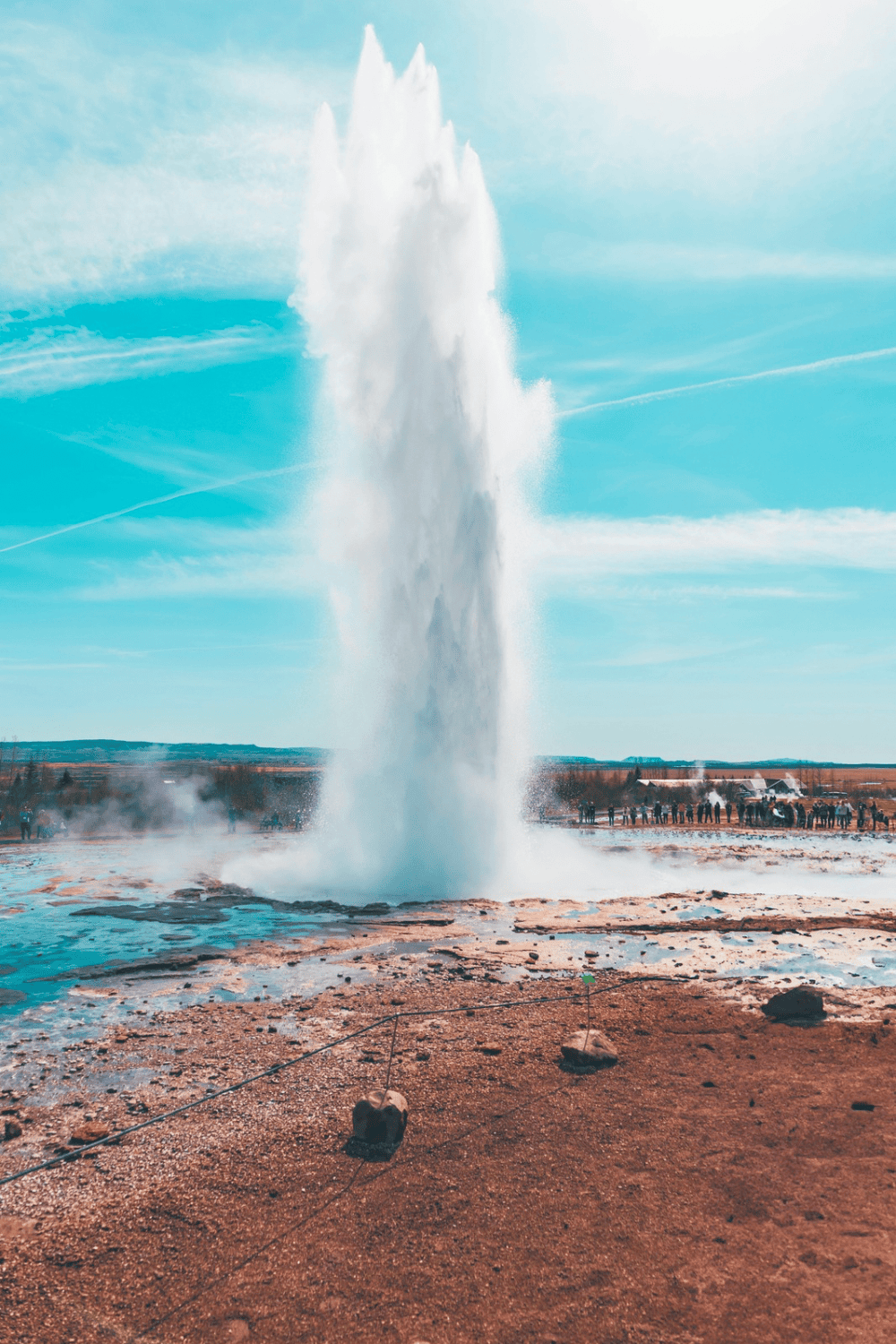
This was probably our favourite stop. Here you’ll see the geothermal area of Geysir. Every few minutes the ground around the hot spring of Strokkur begins to bubble before a huge jet of boiling water suddenly shoots into the air. There’s a smaller hot spring that splutters more frequently but it’s less dramatic.
Everyone stood with cameras ready, trying to predict exactly when it would erupt.
Against the icy landscape it looks incredible, especially if you’re lucky enough to be there on a sunny day.

What You’ll Learn on the Tour
One thing I hadn’t expected was just how much we’d learn during the day tour.
Our guide chatted about Icelandic politics, education, language, renewable energy and everyday life.
We learnt so much – from fairy folklore to how there’s so few women prisoners in Iceland – they actually live in an apartment rather than a prison! She told us about the cost of living, why food is so expensive and what life is like living in a country with such a small population.
It gave us a much better understanding of the country than we’d have got simply driving between attractions on our own.
What Should You Wear?
Even if you’re visiting Reykjavík in relatively mild weather, the Golden Circle can feel much colder.
I’d recommend bringing:
- A warm waterproof coat
- Hat and gloves
- Waterproof walking shoes or boots
- Plenty of layers
- A fully charged phone or camera
The weather changes quickly, and you’ll spend quite a bit of time outside at each stop.
Practical Information
- Duration: Around 8 hours
- Distance: Approximately 230 km
- Starting point: Reykjavik
- Best time to visit: Year-round (winter offers snowy scenery, summer has long daylight hours)
- Suitable for children: Yes
- Toilets: Available at major stops
- Food: Most tours stop at the visitor centre at Gullfoss where you can buy lunch and drinks.
Is the Golden Circle Tour Worth It?
For us, we absolutely felt it was worth spending the extra money on the tour.
Yes, you can drive it yourself. But in winter, having somebody else deal with icy roads while you enjoy the scenery was worth every Euro.
The commentary throughout the day added so much context that we left feeling we’d learned far more about Iceland than we ever would have on our own.
If you’re visiting Iceland for the first time, especially between October and March, I’d happily recommend booking a Golden Circle tour.
It’s one of those trips that’s popular for a reason.
👉 Book the Golden Circle Tour on GetYourGuide
Top Tips for Visiting the Golden Circle
- Book an early tour to make the most of the daylight in winter.
- Dress in warm, waterproof layers.
- Wear sturdy footwear with good grip.
- Keep your camera ready at Strokkur – it erupts every few minutes, but the exact timing is never guaranteed.
- Allow a full day for the experience rather than trying to squeeze it into a busy itinerary.
The Golden Circle was the perfect way to spend the final day of our 4-day Iceland winter itinerary, and I’d recommend it to anyone visiting Iceland for the first time.
👉 How to Travel to Iceland on a Budget
👉 Best Hotels in Reykjavik For an Affordable Break
👉 10 Best Things to Do in Reykjavik in Winter
Leave a Reply