

Visiting Mexico during sargassum season? Discover the best islands, cenotes, ruins, and day trips to avoid the seaweed and enjoy clear water, stunning views, and unforgettable adventures.
Introduction: How to Enjoy Mexico During Sargassum Season
Are you heading to Mexico this summer and worried about sargassum ruining your beach holiday?
We visited the Mexican Riviera Maya during peak sargassum season and still had an amazing time. Although we saw glimpses of the yucky brown seaweed – our trip wasn’t affected.
🌟 You can still enjoy beautiful pristine beaches, cenotes, lagoons, snorkelling and days out. Mexico is still stunning – you just need to know where to go!
2026 Sargassum Update
Heading to Mexico this year? Be aware that 2026 is shaping up to be a particularly heavy sargassum season, with seaweed arriving earlier than usual – some beaches reported build-up as early as January and March. That makes choosing the right destination more important than ever. The good news? The alternatives in this guide are exactly what you need. Keep reading!
In this blog discover alternative destinations and activities in the Yucatán Peninsula.

This post is part of my complete Mexico Travel Guide, where I share itineraries, budget tips and DIY planning advice for visiting Mexico’s Riviera Maya and Yucatán Peninsular.
Contents
- Introduction: How to Enjoy Mexico During Sargassum Season
- 🌿 What Is Sargassum and When Does It Affect Mexico?
- How to Avoid Sargassum in Mexico: Top Alternatives
- 1. Best Islands to Avoid Sargassum in Mexico
- 2. Cenotes: Completely Sargassum-Free Swimming in Mexico
- 3. Explore Mayan Ruins and Culture
- 4. Take a Snorkelling or Boat Trip (Away from Sargassum Zones)
- 5. Discover the Magical Lagoons
- 6. Visit Eco-Parks and Cultural Attractions (Like Xcaret)
- 7. Consider the Pacific Coast (Completely Sargassum-Free)
- Getting About the Yukatán Penisular
- ☀️ When’s the Best Time to Visit Mexico to Avoid Sargassum? Month by Month
- Final Thoughts: Mexico Has So Much More Than Beaches
- Frequently Asked Questions: Sargassum in Mexico
- Related Posts
Some of my content may contain affiliate links for companies I use and love and recommend to awesome readers like yourself. If you take action, (i.e. subscribe, make a purchase) after clicking one of these links, I’ll earn a small amount of pocket money (at no extra cost to you), so I can buy a coffee while creating more helpful content like this.
🌿 What Is Sargassum and When Does It Affect Mexico?
Sargassum is a type of floating brown seaweed that washes up on Mexico’s Caribbean coast – especially along the Riviera Maya, including popular destinations like Cancun, Tulum, and Playa del Carmen.
It is horrible stuff that causes misery for marine life and humans alike. While it’s a natural occurrence, increased amounts in recent years have made it a bit of a beach holiday nuisance.
Sargassum season typically runs from April to October, with the peak months being May through August. During this time, large patches of the seaweed can pile up on beaches, giving off a strong smell as it decays and making swimming unpleasant. The smell is like rotten eggs and I felt so sorry for the people working hard in the heat to try and clear it.
🌟 Tip: Conditions change daily, so always check local forecasts.
It has an awful environmental impact and is damaging Mexico’s tourism industry. But here’s the good news: you don’t have to cancel your beach dreams.
Sargassum doesn’t affect every area equally, and there are lots of beautiful alternatives nearby where you can enjoy crystal-clear water without the seaweed.
How to Avoid Sargassum in Mexico: Top Alternatives
Skip the seaweed without skipping the fun – here’s where to go instead!
1. Best Islands to Avoid Sargassum in Mexico

If you’re looking for sargassum-free beaches, head to the islands. Places like Isla Mujeres, Cozumel, and Holbox often escape the worst of the seaweed because of their location and ocean currents.
Unlike the mainland, which directly faces the flow of sargassum from the Atlantic, the islands have different coastal orientations and deeper waters, allowing the seaweed to drift past or settle less along their shores.
🌟 Tip: It can depend on which side of the island you are – so do your research
🏝️ Isla Holbox

A laid-back, car free island, Isla Holbox is a tranquil paradise. White sand beaches and shallow turquoise waters are home to flamingoes, pelicans and sea turtles.
🌟 Bucket-list activities to experience include a chance to see whale sharks in the summer as they migrate and stunning bioluminescent in the evenings. It has a bohemian vibe and is ideal for a relaxing break.
🏩 Want to stay here? Search accommodations in Isla Holbox
🏝️ Isla Mujeres
Close to Cancun, Isla Mujeres is a small island also with pristine, white sand beaches, turquoise Caribbean sea and vibrant marine life. Ideal for snorkelling fans with an underwater sculpture museum. It too has a laid-back vibe and strong Maya roots.
🏩 Explore places to stay in Isla Mujeres here!
🏝️ Cozumel

Close to Playa Del Carmen, Cozumel is a larger island. It is known for its coral reefs and natural parks. My daughter took a snorkelling trip here and absolutely loved it.
It is a pretty island with beautiful beaches and a chance for cultural exploration.
🏩 Looking for accommodation in Cozumel? Check here!
🏖️ Day Trips to The Islands
Even if you don’t stay in a hotel on the islands, you can take a short ferry trip and experience their beautiful beaches.
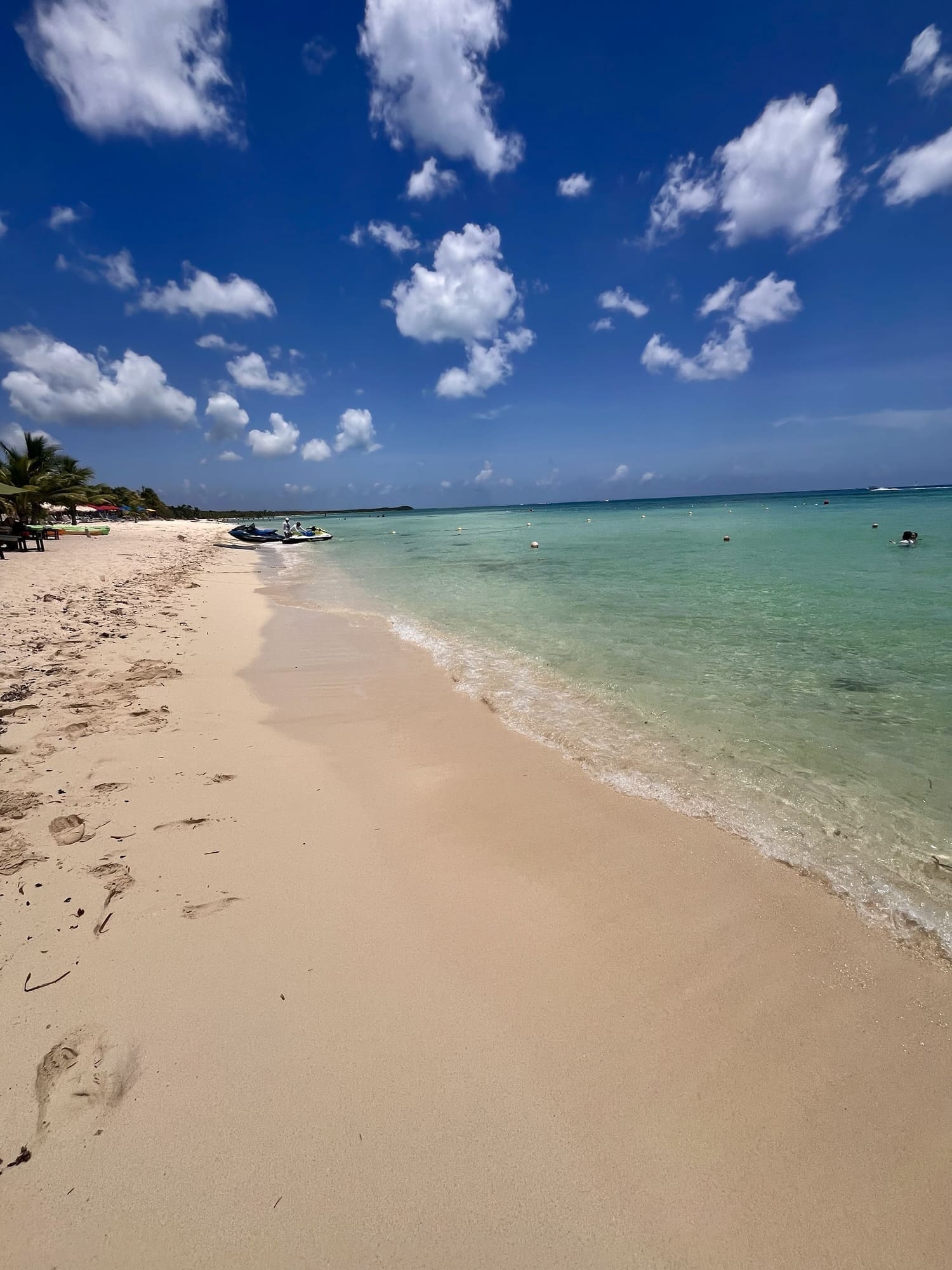
We took the ferry from Playa del Carmen to Cozumel and were amazed at how clear the water was. It was a perfect beach day – warm, calm sea, white sand, and not a single patch of seaweed in sight.
The beach we visited was Playa Palancar. We took the ferry from Playa and a taxi from the port. Entry to the beach was 20 USD.
We spent a luxurious day on one of the prettiest beaches I’ve ever seen, enjoying delicious food and cocktails. You can also book tours to this beach on Get Your Guide and Viator.
🚢 From Cancun, the ferry to Isla Mujres is only a 30 minute ride and from Playa del Carmen the ferry to Cozumel is only 35 minutes.
If you prefer a tour, there are plenty to book on Get Your Guide and Viator.
2. Cenotes: Completely Sargassum-Free Swimming in Mexico

💧 What Are Cenotes – and Why They’re the Perfect Escape from Sargassum
Cenotes (pronounced seh-no-tays) are natural freshwater sinkholes formed when limestone bedrock collapses, revealing crystal-clear underground pools.
The Chicxulub asteroid impact is believed to have created the cenotes in the Yukatán Peninsular, 66 millions years ago. There are thousands of cenotes across the Yucatán Peninsula, and they are completely untouched by sargassum – making them the perfect place to cool off and swim.

Some are open-air, surrounded by jungle; others are dramatic caves with stalactites and filtered light beaming through cracks in the rock. They’re often cooler than the sea, incredibly refreshing, and many have facilities for swimming, snorkelling, or even diving.
A local recommended Cenote Minotauro and Cenote Corazón (Heart Cenote), and both were stunning – peaceful, clean, and with that magical, otherworldly feel that cenotes are known for.

Cenote Minotauro felt more cosy. It is run by a lovely family and included a guided tour of the caves. There was a cafe, swimming pool and plenty of hammocks.
👉 Website for Cenote Minotauro
Cenote Corazon was much larger and better for swimming. The water was crystal clear and snorkelling there was truly magical.
👉 See reviews for Cenote Corazon on Trip Advisor
Whether you’re staying inland or just looking for a unique day trip, cenotes are a brilliant way to experience the beauty of Mexico beyond the beach.
🚐 How We Got There
We took the collectivo (shared minivan) from Playa Del Carmen to Centote Minotauro and a taxi from Tulum to Cenote Corazon. If you would prefer a tour, you can book Cenote Tours on Viator.
3. Explore Mayan Ruins and Culture

For a great alternative to a beach day – don’t miss Mexico’s incredible Mayan history. The Mayan history and culture is fascinating.
From their holistic approach to life, appreciation of Mother Nature and deep spirituality – to their gruesome history of human sacrifice – the Mayans are interesting and wonderful people – happy to teach you all about their culture.
There are all sorts of trips you can do including visits to ancient ruins and modern day Mayan villages. Spend time with Mayan people and learn how to cook their dishes and take part in spiritual rituals.
Top Ruin Archaeological sites:
Tulum Ruins: The only ruins to be next to the sea, so the views are dramatic. We took a tour, which also included a boat trip and snorkelling with sea turtles.
🌟Tip: Last entry to the ruins is at 3.30pm and you will need Pesos to pay the tax.
Coba: Less well-known and buried deep in the jungle. The second largest pyramid, Nohoch Mul Pyramid is here. You used to be able to climb up but that is prohibited nowadays.
Chichén Itzá: One of the Wonders of the World – we visited Chichen Itza on an all day tour, which included a Cenote, visit to a Mayan village and lunch.
🌟 Tip: People say go early to avoid the crowds but we went in the afternoon and it was quiet.
Our guide said that most people prefer the mornings to the afternoons to avoid the heat but there is more shade in the afternoon for you to avoid the sun. Plus, our cenote visit was nice and quiet because most people go in the afternoons.
4. Take a Snorkelling or Boat Trip (Away from Sargassum Zones)

Many boat tours go to offshore reefs or hidden bays that aren’t affected. You can still experience Mexico’s underwater beauty even when the beaches are murky.
We snorkelled with turtles just off the beach in Tulum and although the beach was covered in sargassum, the water was fine. My daughter also went on a tour in Cozumel, which is famous for its clear water and marine life.
There are many options for tours on Get Your Guide including: private boats, catamaran tours and snorkelling packages.
🌍 Eco-conscious Tip: Choose local tour operators who respect marine life.
5. Discover the Magical Lagoons

Lagoons are untouched by sargassum and offer amazing scenery. Take a day trip to Tulum or stay a few days in Bacalar.
Bacalar
Our favourite part of our trip was our stay in Bacalar.
Bacalar Lagoon (Lagoon of Seven Colors) is famous for its bright turquoise hues and chilled vibe. A couple of hours drive from Playa, Bacalar Lagoon is stunning and relatively untouched. The area is quiet and laid-back and you are surrounded by nature


Hire a kayak, swim, or relax by the shore. Our highlights were a sail trip and playing in the Rapidos – a natural lazy river.
🔗Blog to Read: Hotel Aires Bacalar: A Peaceful Garden Hideaway Near Bacalar Lagoon
Tulum Lagoon (Laguna de Kaan Luum)
Really close to Cenote Corazon, Laguna de Kaan Luum was recommended to us for its gorgeous colour and peacefulness – away from the touristic area in Tulum.
There are lots of facilities, including a snack bar, bathrooms – plus activities like paddleboarding and life jacket rental.
🚐 How to Get There:
- Collectivo – Find a collectivo (shared van) heading towards Felpe Carillo Peurto from Tulum
- Taxi – Takes 10 minutes from Tulum (more expensive)
🗺️Google Maps Link
6. Visit Eco-Parks and Cultural Attractions (Like Xcaret)
A very expensive option but from friends, I hear these parks are amazing. Xcaret, Xel-Há, and Xplor are all great family-friendly all-day excursions.
They combine adventure, nature and culture with shows and water activities.
👉 You can book your tickets online here!
🌟 Tip: Pre-book tickets online to save money
7. Consider the Pacific Coast (Completely Sargassum-Free)
If your heart is set on guaranteed clear water and you have flexibility on where to go, Mexico’s Pacific coast is worth knowing about. Unlike the Caribbean-facing Riviera Maya, the Pacific coast – including destinations like Puerto Vallarta, Huatulco and Cabo San Lucas – sits on a completely different ocean current system and never sees sargassum at all.
I haven’t personally explored this side of Mexico yet – my experience is firmly rooted in the Yucatán – but it’s a solid option if avoiding sargassum entirely is your number one priority and you’re open to a different kind of Mexican adventure.
Getting About the Yukatán Penisular
There are lots of ways to get around Mexico. We mainly travelled using InDrive for taxis, Collectivo and the ADO bus service.
🚗 Car – The main road that goes through the Yukatán Peninsular is fairly straight forward. Look out for potholes and it is not advisable to drive at night.
🚐 Collectivo – Collectivos are a shared minivan, which you can catch from Collectivo stations or from the main road. They are very cheap and you can just hail them down.
👉 See more about Collectivos here!
🚍 Bus – The ADO bus has a fantastic network and buses are clean, air-conditioned and comfortable. We found Busbud easy to use.
🚕 Taxi – More expensive if you are solo or in a pair but because we were a group of 5 – we found taxis affordable.
🌟 Tip: We found InDrive to be a great app – it’s like Uber -and you get the best rates.
👉 Take a look at InDrive taxi app
🛤️ Train – A new modern train network operates across the region. You can even catch the train from Bacalar. Slightly more expensive than other options but enables you to travel in comfort and be able to walk around.
☀️ When’s the Best Time to Visit Mexico to Avoid Sargassum? Month by Month
If avoiding sargassum is a top priority, plan your trip during the drier winter months, when the currents shift and seaweed is far less common. The best time to visit is typically:
- November to March: very little to no sargassum.
- April to June: early season, some build-up may begin.
- July to October: peak sargassum season – more likely to affect mainland beaches.
That said, conditions can vary from week to week, so it’s a good idea to check sargassum forecasts or join local Facebook groups for up-to-date info before you go.
🌟 Tip: I joined Mexico Sargassum Seaweed Updates on Facebook.
Final Thoughts: Mexico Has So Much More Than Beaches
Although, summer is not the best time to visit Mexico, for those who have little choice, don’t worry – you can enjoy Mexico even during sargassum season.
You can still explore inland gems, islands, and cultural sites. We barely noticed the seaweed and made unforgettable memories.
Have you been to the Maya Rivieria during sargassum season? Share your favourite spot in the comments!
Frequently Asked Questions: Sargassum in Mexico
Is there sargassum in Mexico in 2026?
Yes – and 2026 is expected to be a heavier than average year. Early arrivals were reported in some areas before the typical season even began. That said, it doesn’t affect every beach equally, and the destinations in this guide remain great options.
Which beaches in Mexico have no sargassum?
The most reliable spots in the Caribbean are the islands – particularly Isla Holbox, Isla Mujeres (especially Playa Norte) and the western side of Cozumel. These are sheltered from the main Atlantic currents that carry sargassum ashore. All cenotes and lagoons like Bacalar are completely unaffected. Mexico’s entire Pacific coast is also sargassum-free year-round.
What months is sargassum worst in Mexico?
Peak season is typically May through August, with the Riviera Maya’s exposed eastern beaches seeing the heaviest build-up. April and October are transitional months – you might get lucky, but there are no guarantees. I follow sargassum groups on Facebook and it seems to be coming earlier and earlier.
Is Cancun affected by sargassum?
It can be, particularly in the southern part of the Hotel Zone. However, the northern tip of Cancun and nearby Playa Mujeres tend to fare better due to the natural shelter provided by their position. Hotels in the zone also tend to clean beaches regularly, so the impact is often manageable.
Is Cozumel sargassum-free?
The west-facing beaches of Cozumel – the main tourist side – are among the most consistently clear on the Caribbean coast. The island’s position means sargassum tends to drift past rather than pile up onshore. It’s one of the best bets for clear water in the region. We didn’t see any while we were there in peak sargassum season.
Leave a Reply